
What is the cheapest way to heat a house in 2026? Gas, electricity and wood under the microscope
Heating bills can decide a household budget for a whole season. When energy prices rise, the same question comes back: what should you heat your house with to pay as little as possible? Gas, electricity, or a wood-burning fireplace?
At our company we have been repeating one phrase for years — saving energy, meaning sensible management of heat. A fireplace gathers the energy held in wood and directs it where you need it — into your home. That only makes sense, though, if it genuinely pays off. So instead of going by impressions, let us do the arithmetic.
In this article we compare the three most popular ways of heating and show how to work out for yourself what it really costs to heat a house with each of them.
Disclaimer: All prices and tariffs relate to the Polish market, are given in zloty (PLN, gross) and are indicative — as at August 2026. Actual rates depend on the supplier, the tariff, the region and the time of year. The cost of 1 kWh of heat is a calculated figure with a margin of about ±15–20%, depending on the moisture content of the wood and the actual efficiency of the appliance. Before you decide, check the current price list of your energy supplier and local wood prices.
Method first: do not compare „per metre", compare „per kilowatt-hour"
This is the most common mistake in comparisons like this one. Setting the price of gas per cubic metre against electricity per kilowatt-hour and wood per „metre" leads nowhere — because every fuel yields a different amount of heat, and every appliance burns it with a different effectiveness.
The only measure that lets you compare fuels fairly is the cost of one kilowatt-hour of heat that actually reached the room. It takes three things into account at once:
- the price of the fuel,
- its calorific value (how much energy is „inside"),
- the efficiency of the appliance (how much of that energy reaches the house and how much escapes up the chimney).
The formula is simple:
Cost of 1 kWh of heat = fuel price ÷ (calorific value × efficiency)
And it is with this formula that we will work out each of the three options.
Natural gas — convenient, but increasingly expensive
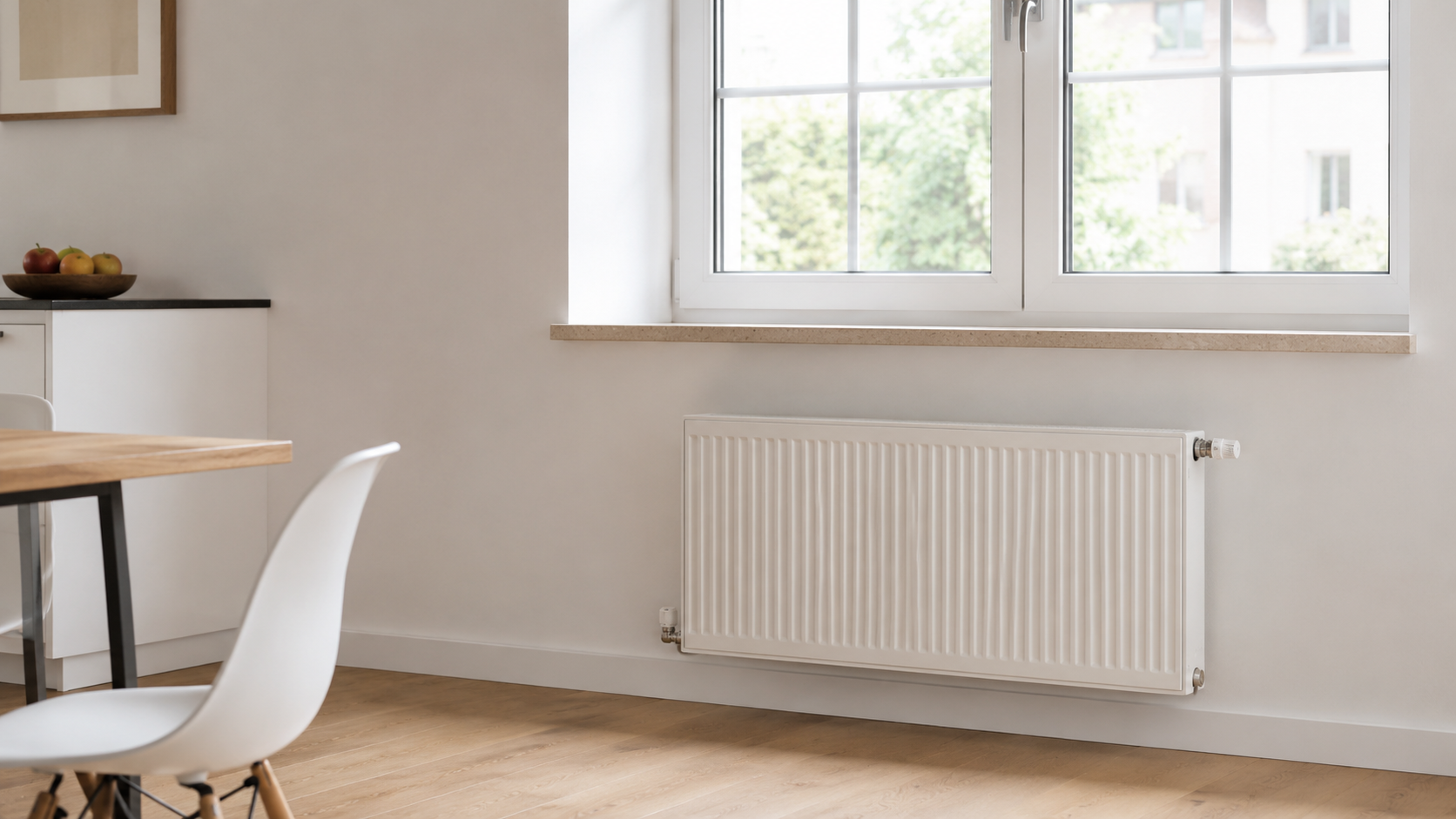
A gas boiler is still the most frequent choice in Polish homes: no attention needed, thermostat-controlled, no fuel to store. That convenience has to be paid for, though — and since part of the tariffs were unfrozen, gas has stopped being as cheap as it was a few years ago.
- Calorific value of high-methane gas: ~11 kWh/m³
- Efficiency of a modern condensing boiler: ~90%
- Cost of gas energy including distribution (gross): ~PLN 0.42/kWh
Cost of 1 kWh of heat from gas ≈ PLN 0.47.
Electricity — the simplest to install, the dearest on the bill
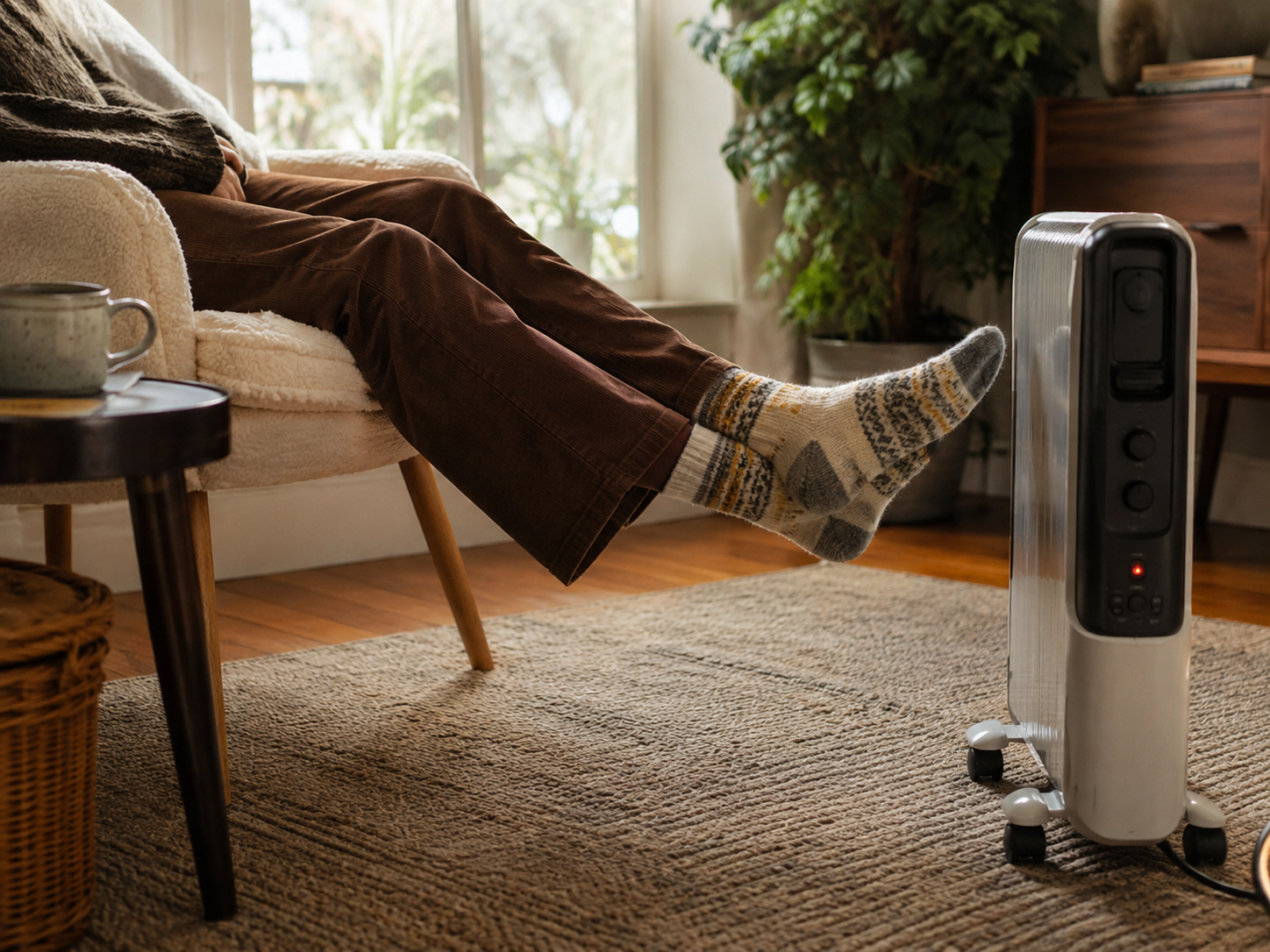
Electric heating (radiators, mats, electric boilers) is tempting in its simplicity: no chimney, no fuel to store, full control. The trouble is that with resistive heating you pay for pure electricity, and that is the most expensive carrier of heat today.
- Efficiency of an electric heater: ~99% (almost all of it turns into heat)
- Price of electricity, day tariff (gross, including distribution): ~PLN 1.00/kWh
- Night tariff (G12, two-zone meter): ~PLN 0.75/kWh
Cost of 1 kWh of heat from electricity ≈ PLN 1.01 (day) / PLN 0.76 (night).
Note: a heat pump is another matter entirely — from 1 kWh of electricity it can „produce" 3–4 kWh of heat, which changes the sums completely. Here we are talking only about classic resistive heating.
Wood — the cheapest heat, if you do it properly
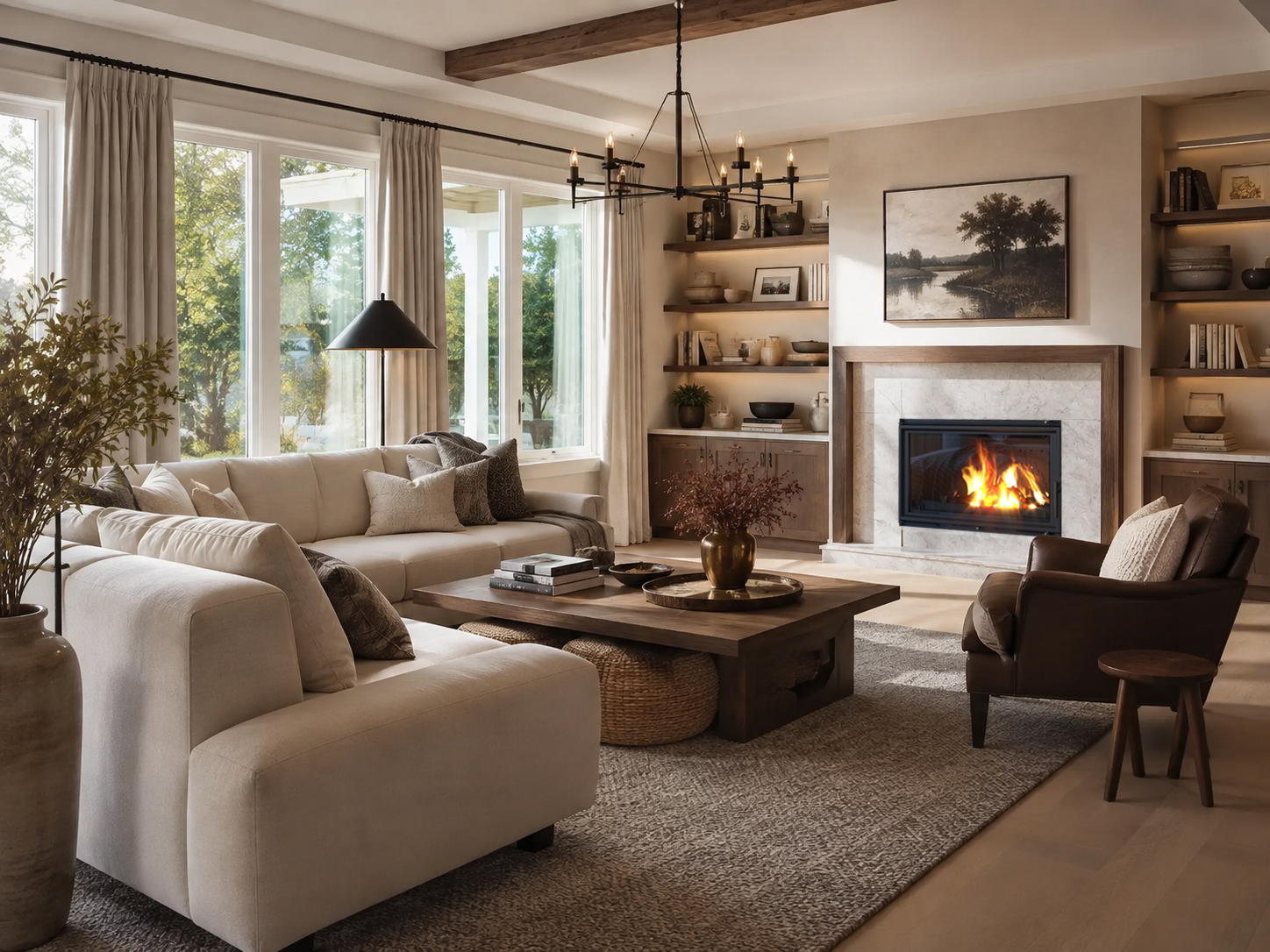
This is where it gets interesting. Many people will say straight away: „but wood has gone up too". True, and yet the numbers still work in its favour — provided you meet a few conditions.
First — the right appliance, properly installed. For a fireplace to heat the whole house, the output of the insert has to be matched to the floor area, and the chimney, the grilles and the warm air distribution have to be run correctly. Only then is it worth considering giving up other sources of heat at all.
Second — the fuel. We are calculating for the wood that should actually go into a fireplace: seasoned, with a moisture content of up to 20%, from hardwood species — oak, beech, hornbeam, ash.
And this is where cast iron shows its advantage. A KAWMET cast iron insert stores heat and gives it back to the room long after the fire has died down — so you draw more useful heat out of a single load of wood. Combined with a double combustion system and an Ecodesign-compliant design, that means high efficiency with low emissions.
- Calorific value of hardwood (solid, ~20% moisture): ~2900 kWh/m³
- Efficiency of a modern KAWMET cast iron insert (Ecodesign, double combustion): ~78%
- Indicative market price of hardwood: ~PLN 500/m³ solid
Cost of 1 kWh of heat from a KAWMET cast iron fireplace ≈ PLN 0.22.
Side by side: what 1 kWh of heat costs
| Heat carrier | Fuel price | Calorific value | Efficiency | Cost of 1 kWh of heat |
|---|---|---|---|---|
| Hardwood — KAWMET cast iron fireplace | ~PLN 500/m³ | 2900 kWh/m³ | 78% | ~PLN 0.22 |
| Softwood (pine, alder) | ~PLN 350/m³ | 1550 kWh/m³ | 78% | ~PLN 0.29 |
| Natural gas | ~PLN 0.42/kWh | 11 kWh/m³ | 90% | ~PLN 0.47 |
| Electricity — night tariff (G12) | ~PLN 0.75/kWh | — | 99% | ~PLN 0.76 |
| Electricity — day tariff | ~PLN 1.00/kWh | — | 99% | ~PLN 1.01 |
In other words: heat from a cast iron fireplace costs roughly half as much as from gas and around a fifth of what it costs from electricity on the day tariff.
When does wood stop paying off?
That advantage is not fixed for good. The price of wood can differ a great deal between regions and seasons. If you pay not PLN 500 but PLN 900–1000 per cubic metre of hardwood, the cost per kilowatt-hour rises to about PLN 0.40–0.43 — in other words it closes in on gas. That is why it is worth buying wood ahead of time, outside the peak of the season, and from a reliable source.
The cheapest is often wood from the State Forests (the e-drewno portal, drewno.lasy.gov.pl), while split and dry wood delivered by local suppliers costs more. Always compare the price converted to a cubic metre of solid wood, not to the „metre" from the advertisement (more on that below).
Stacked cubic metre versus solid cubic metre — do not get caught out
This is a trap that can „hide" as much as 40% of the price.
- A cubic metre (m³) of solid wood — as much space as the wood would take up with no gaps at all.
- A stacked cubic metre — a stack of logs in which the wood itself accounts for only about 0.7 m³; the rest is air between the pieces.
The same figure quoted „per metre" can therefore mean a price around 40% higher, depending on whether it refers to a stacked metre or a solid cubic metre. Always ask the seller which unit they mean.
Why the moisture content of the wood decides your bill
Freshly cut wood holds 40–50% water. Before such a piece starts giving heat to the room, the fireplace first has to boil that water off — and the energy for that comes out of your fuel. The result? Less heat, more soot and glass that dirties faster.
Wood dried to 15–20% moisture gives roughly a third more heat from the same volume. The species makes a difference too:
- hardwood (oak, hornbeam, beech, acacia): ~2800–3000 kWh/m³,
- softwood (pine, alder, poplar): only ~1450–1600 kWh/m³.
On top of that comes the appliance itself: the efficiency of a modern closed insert is incomparably higher than that of an old open fireplace, in which most of the heat simply escapes up the chimney.
How much will you really save, and when does a fireplace pay for itself?
A fireplace is an investment — the insert, the chimney, the surround, the heat distribution. So before buying it is worth working out not only the price of the appliance but also the difference in heating costs.
An illustrative example: a house using about 15,000 kWh of heat per season.
- electricity (day): 15,000 × PLN 1.01 ≈ PLN 15,150
- gas: 15,000 × PLN 0.47 ≈ PLN 7,050
- wood (KAWMET cast iron fireplace): 15,000 × PLN 0.22 ≈ PLN 3,300
In this scenario the difference between wood and gas is close to PLN 4,000 a year — and against electricity it is greater still. That is the sum which „repays" the investment in fireplace heating, season after season. And there is the independence that comes with it: a fireplace heats even when the electricity or the gas is off — and on a plot with no utility connections it is often the only sensible answer.
Do it properly — leave the choice and the installation to a specialist
The biggest mistake is to treat a fireplace as decoration. An insert of the wrong output, or one installed incorrectly, will not deliver the savings you are after — it will smoke, overheat one room and leave the others cold.
A good specialist will choose an insert of the right size and output for your floor area, put together the fittings, run the chimney correctly and distribute the warm air around the whole house. The result: a warm, comfortable home at genuinely low heating costs.
The KAWMET range covers cast iron fireplace inserts and freestanding stoves in the Standard, Premium and ECO lines — from classic, decorated castings to contemporary shapes. We make them all in our own foundry, from iron that stores heat and gives it back slowly. Our dealer in your region will help you choose the right model for your floor area and quote the current price.
Summary
- The cheapest way to heat a house is hardwood — about PLN 0.22 per kWh of heat, provided the wood is seasoned (20% moisture or less) and the insert is correctly chosen and well installed.
- Gas works out roughly twice as expensive, and resistive electric heating several times as expensive (unless you are using a heat pump).
- The advantage of wood melts away when you buy it dear, wet, or in the wrong unit (stacked metres instead of solid cubic metres).
- What counts is the numbers, not impressions — always compare the cost of a kilowatt-hour of heat, not the price „per metre".
Price sources (August 2026, Polish market): tariffs approved by the Energy Regulatory Office, price lists of gas and electricity suppliers, the State Forests / e-drewno portal and market price lists for firewood. The figures are indicative.